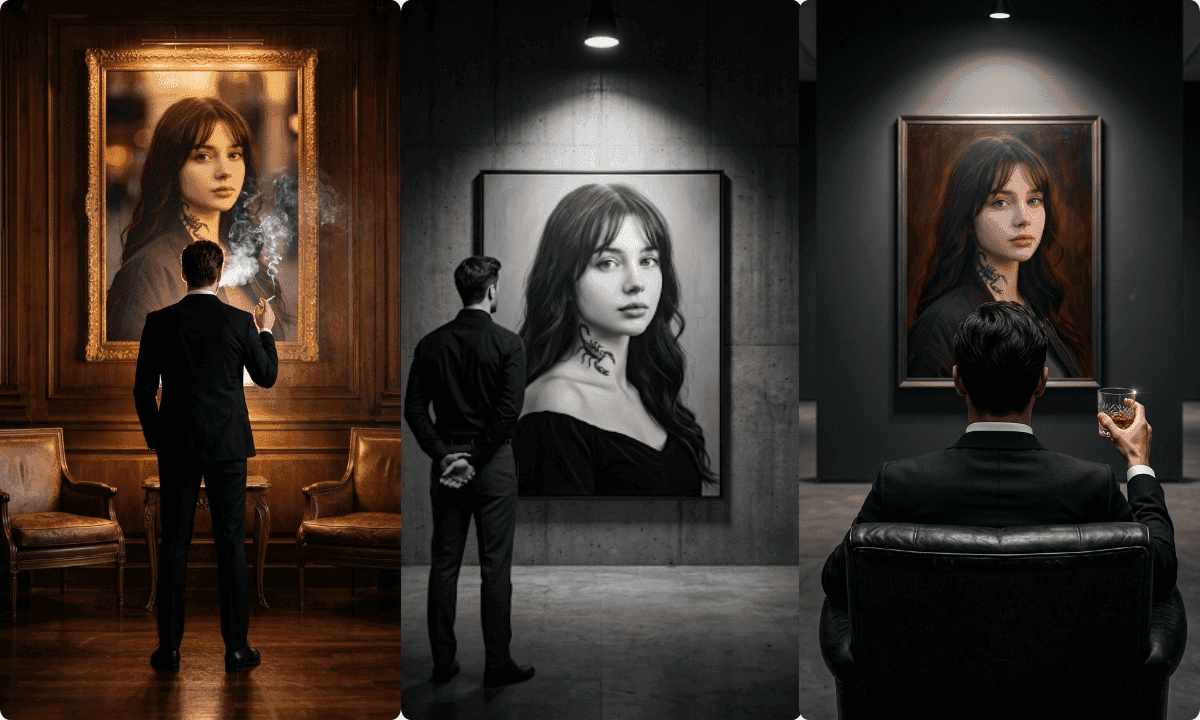
Let’s be honest for a moment. Most AI “cinematic scenes” don’t feel cinematic at all. They look staged, empty, and lifeless. The lighting is flat, the composition feels random, and there’s no story behind the image. It doesn’t feel like a frame from a film. It feels like AI filling space.
The problem isn’t the AI. The problem is the direction.
If you want images that feel like art gallery photography, luxury interiors, and cinematic storytelling, you need to think like a director, not just a prompt writer.
The key is using Gemini’s Image-to-Image feature with structured, cinematic prompts. You lock in the subject, then build the entire environment, lighting, and mood around a single idea:
Someone observing something meaningful.
That’s where the story comes from.
Below are 10 cinematic gallery-style prompts designed to create images that feel like film stills, not AI outputs.
The Workflow (Important):
Before you use these:
1. Upload a reference photo (for the character).
2. Paste the prompt below.
This keeps the subject consistent while the scene does all the storytelling.
1. The Silent Observer:
Best for: Minimal cinematic storytelling and moody gallery aesthetics.
Prompt:
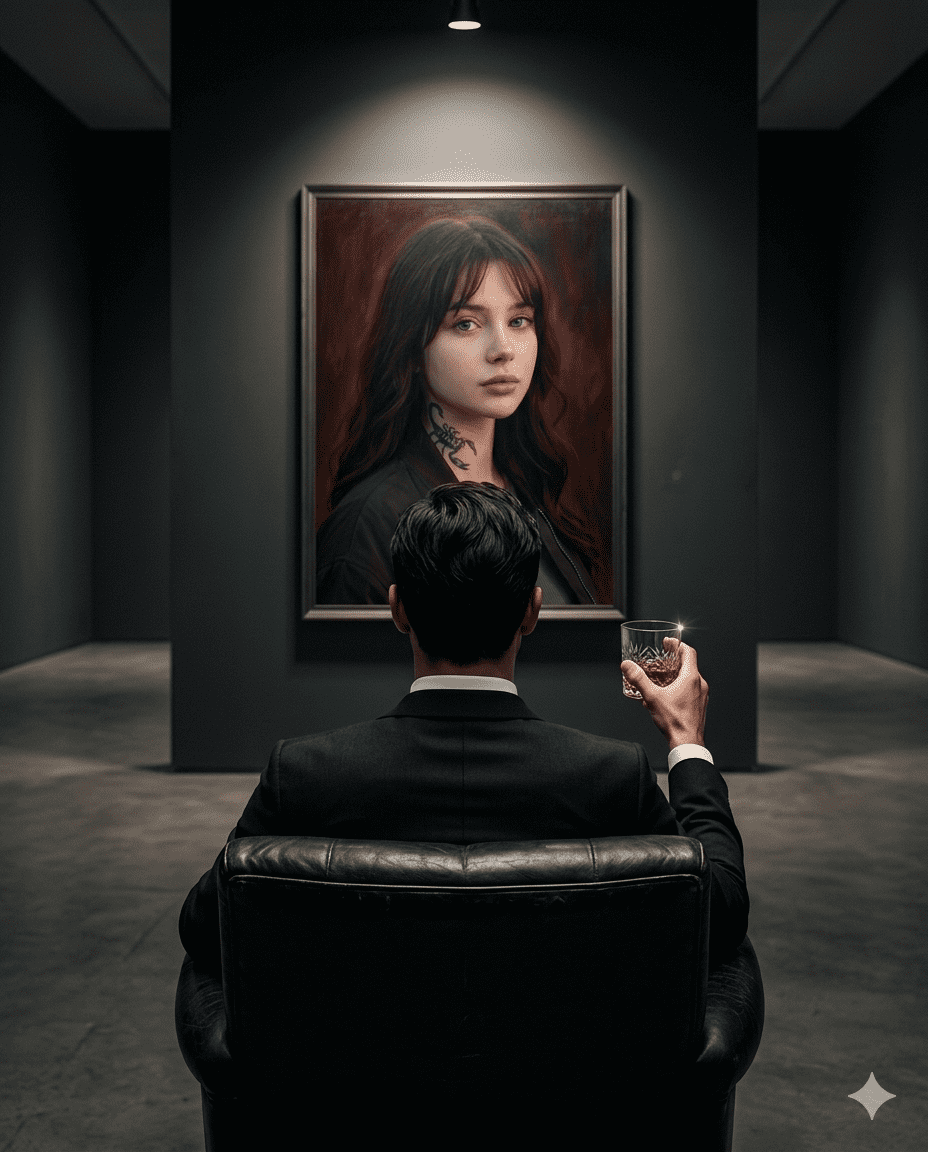
Create a cinematic interior scene of a man seated in a black leather chair viewed from behind, facing a large framed portrait on a dark gallery wall. He wears a tailored black suit, one hand raised holding a whiskey glass with amber liquid catching light. The painting features a realistic portrait of a woman with a calm direct gaze rendered in deep red and charcoal tones. Minimalist gallery with concrete flooring and wide empty walls. Single overhead spotlight illuminating the painting creating a halo glow with deep surrounding shadows. Strong contrast and centered composition with heavy negative space. Cinematic photography style with visible texture in fabric, glass, and canvas. Shot with an 85mm lens and shallow depth of field. Use aspect ratio 4:5.
2. The Monochrome Exhibition:
Best for: Artistic black-and-white visuals and high-contrast compositions.
Prompt:
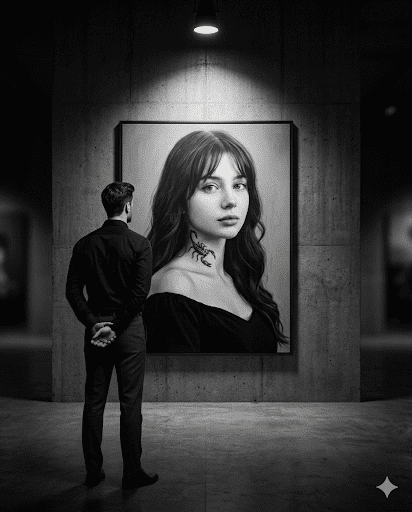
Create a cinematic black and white gallery scene of a man standing with his back to the camera, hands clasped behind him as he observes a large portrait on a raw concrete wall. He wears a fitted black shirt and tailored trousers. The artwork features a high-contrast portrait of a woman in an off-shoulder dress with a composed distant gaze. Minimalist exhibition space with subtle texture. Single overhead spotlight casting a focused beam on the painting. Strong monochrome contrast and cinematic composition with negative space. Shot with an 85mm lens and shallow depth of field. Use aspect ratio 4:5.
3. The Collector’s Room:
Best for: Luxury interiors and high-end cinematic storytelling.
Prompt:
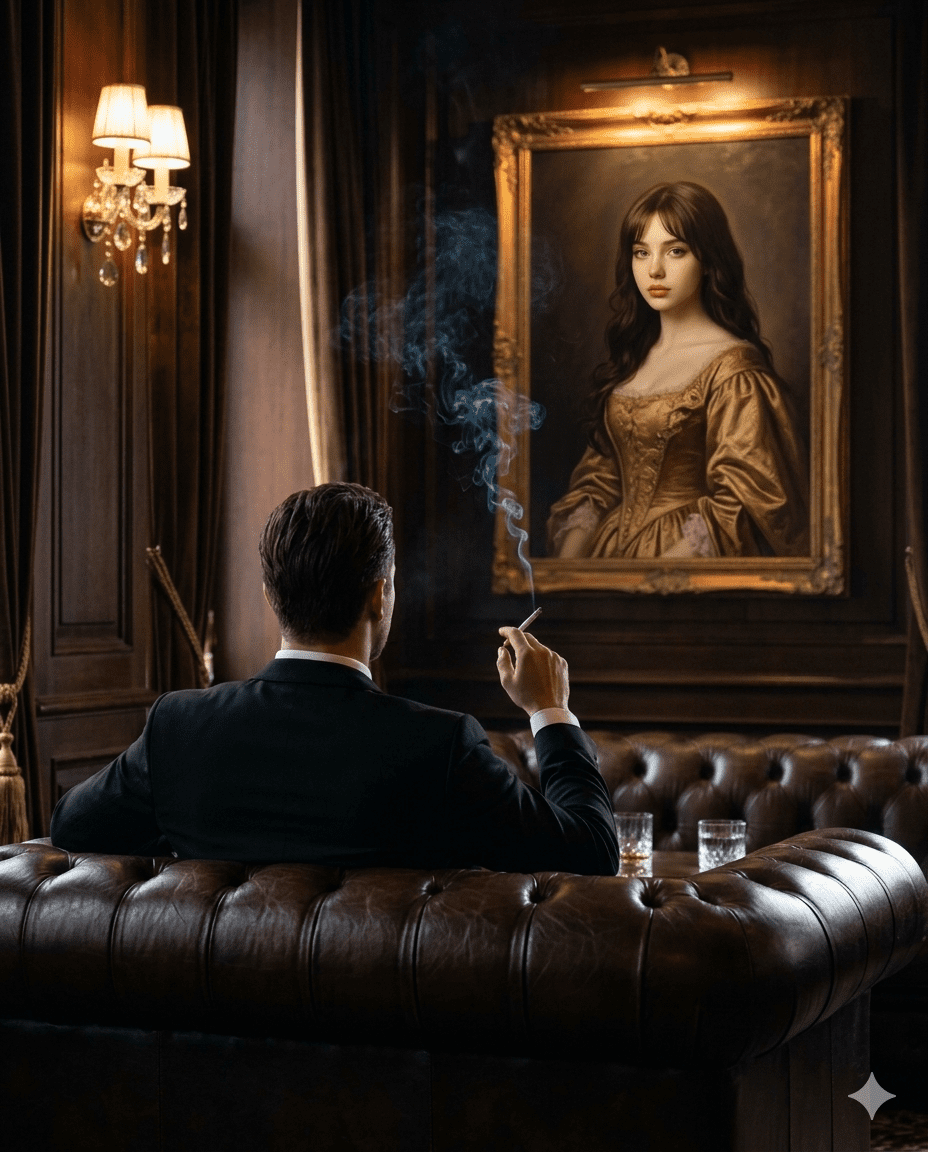
Create a cinematic luxury interior of a man seated on a tufted leather sofa viewed from behind, facing a large ornate portrait in a dark wood-paneled room. He wears a tailored black suit, holding a lit cigarette with soft smoke rising. The painting features a woman in a vintage gold gown with a regal expression. Warm chandelier light fills the room with reflections on crystal and glass. Rich textures in wood, leather, and fabric. Soft spotlight illuminating the painting creating depth and contrast. Shot with an 85mm lens and shallow depth of field. Use aspect ratio 4:5.
Read also: 8 Cinematic Gemini Prompts That Create Luxury Beauty Photos
2. 5 Cinematic Saree Prompts: Upgrade Your AI Fashion Portraits
4. The Forbidden Gaze:
Best for: Dark cinematic mood and seductive storytelling visuals.
Prompt:
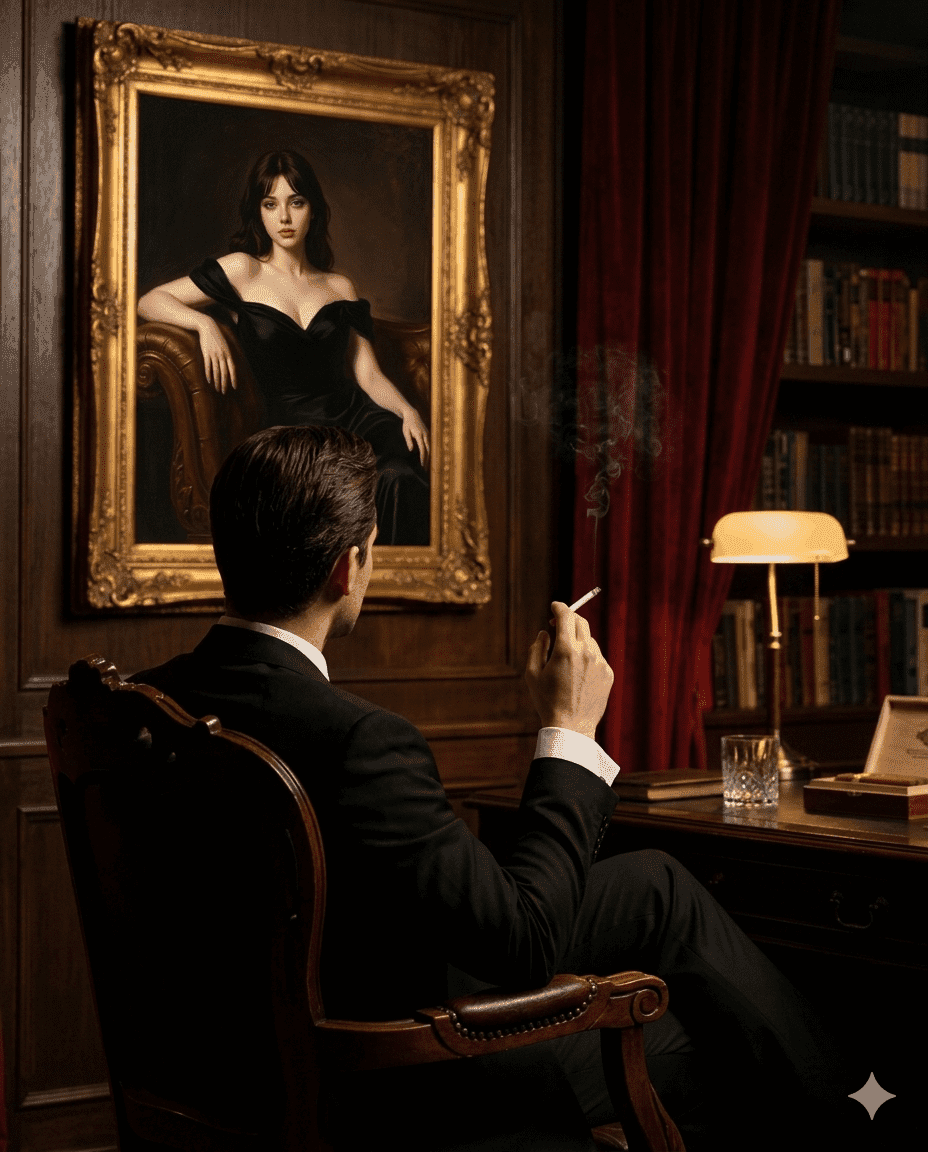
Create a cinematic study interior of a man seated in an ornate wooden chair viewed from behind, holding a lit cigarette. He wears a tailored black suit and looks toward a large gilded portrait. The painting features a woman reclining in a black evening dress with a confident alluring gaze. Deep red velvet curtains and warm low-key lighting enhance the scene. Strong contrast with rich shadows and warm highlights. Cinematic composition with depth and texture. Shot with an 85mm lens and shallow depth of field. Use aspect ratio 4:5.
5. The Art Critic:
Best for: Minimalist gallery aesthetics and conceptual storytelling.
Prompt:
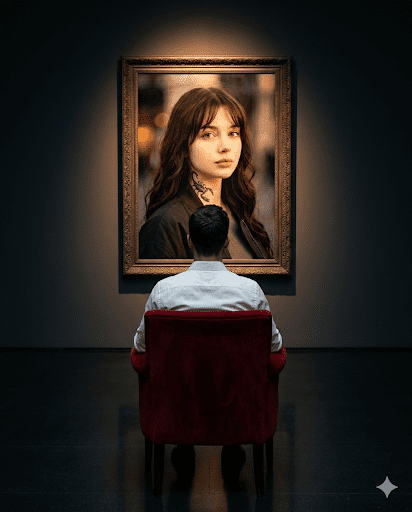
Create a cinematic gallery scene of a man seated in a plush red armchair viewed from behind, wearing a white shirt and observing a large portrait closely. The painting features a soft introspective woman with painterly textures. Dark minimalist gallery with subtle reflections. Soft spotlight illuminating the artwork with deep shadows surrounding. Strong negative space and centered composition. Shot with an 85mm lens and shallow depth of field. Use aspect ratio 4:5.
6. The Museum Corridor:
Best for: Classical aesthetics and storytelling depth.
Prompt:
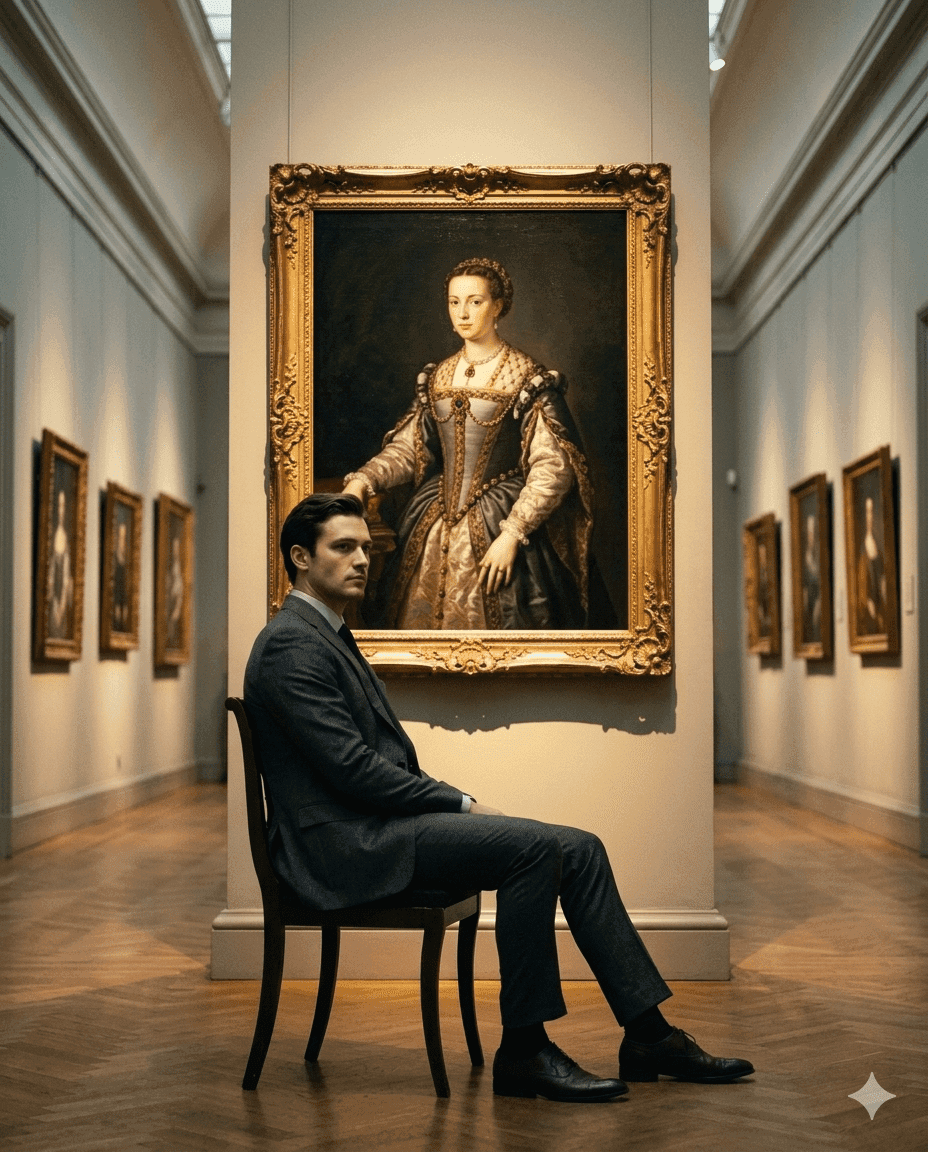
Create a cinematic museum scene of a man seated on a wooden chair facing a large classical portrait. He wears a dark suit with composed posture. The painting features a traditionally dressed woman with intricate jewelry and calm expression. Symmetrical corridor with smaller artworks fading into the background. Warm spotlight illuminating the main painting. Balanced cinematic composition with depth and perspective. Shot with an 85mm lens and shallow depth of field. Use aspect ratio 4:5.
7. The Noir Office:
Best for: Film noir style and moody storytelling.
Prompt:
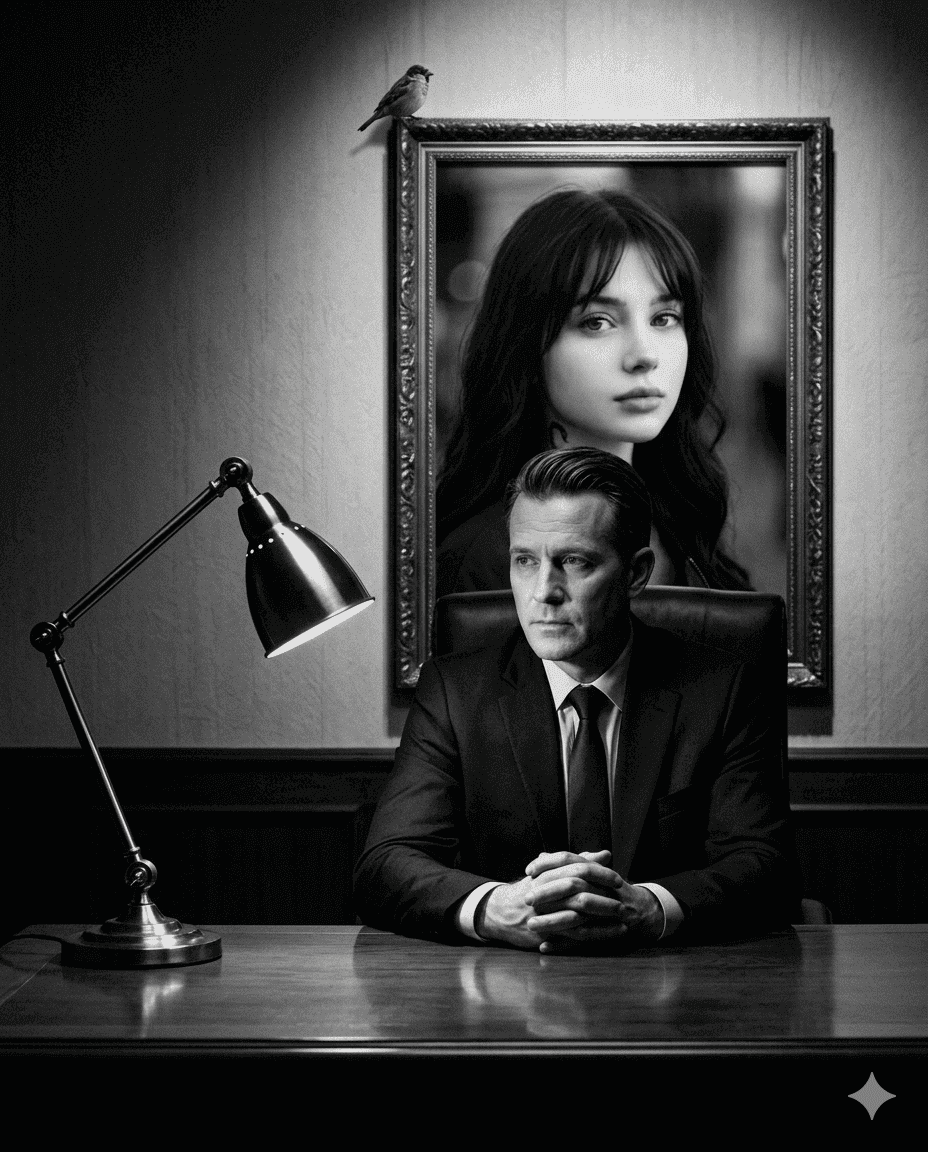
Create a cinematic black-and-white office scene of a man seated behind a wooden desk, hands clasped, looking slightly to the side. Behind him hangs a large portrait of a woman with a distant gaze. A small bird perched on the frame adds subtle detail. Single desk lamp and spotlight create strong noir contrast and deep shadows. Minimalist interior with cinematic composition and film grain texture. Shot with an 85mm lens and shallow depth of field. Use aspect ratio 4:5.
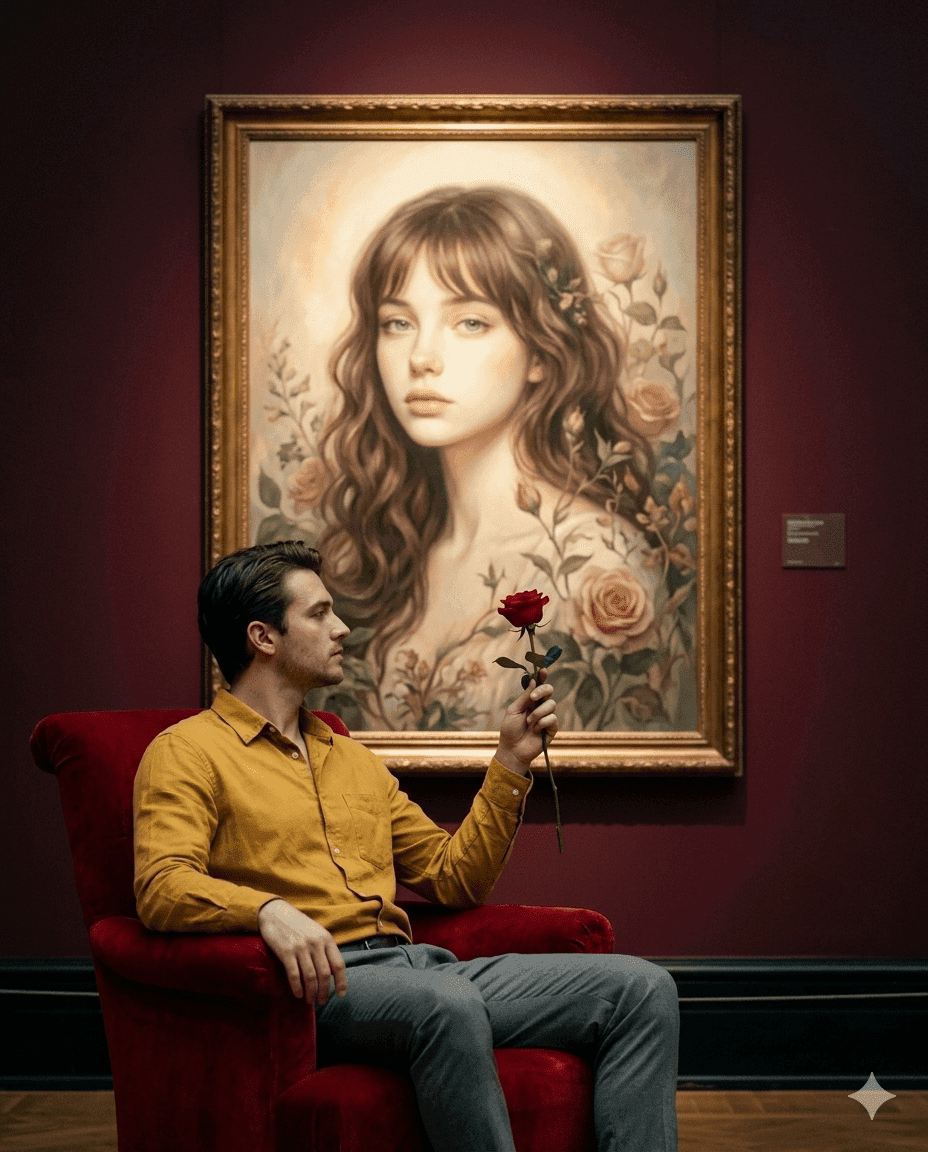
8. The Red Rose Gesture:
Best for: Emotional storytelling and artistic symbolism.
Prompt:
Create a cinematic gallery scene of a man seated in a red armchair wearing a yellow shirt, holding a red rose toward a large portrait. The painting features a soft portrait of a woman with floral details and a calm expression. Deep burgundy wall with soft spotlight illuminating the artwork. Strong color contrast between red, yellow, and muted tones. Cinematic composition with negative space. Shot with an 85mm lens and shallow depth of field. Use aspect ratio 4:5.
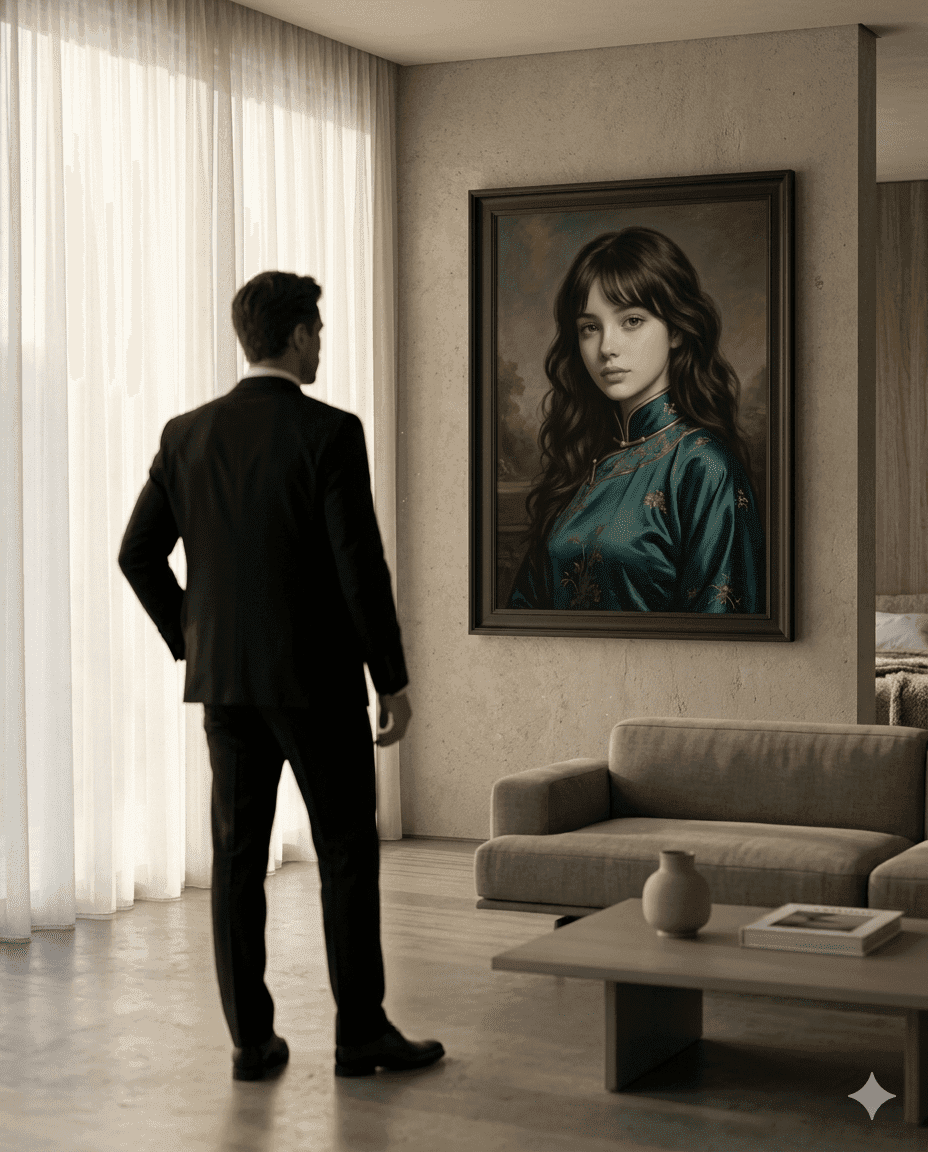
9. The Quiet Living Room:
Best for: Soft cinematic realism and modern storytelling.
Prompt:
Create a cinematic interior scene of a man standing in a modern living room facing a large portrait. He wears a black suit with relaxed posture. The painting features a woman in traditional attire with soft expression. Natural daylight entering through sheer curtains creates soft diffused lighting. Minimalist setting with subtle textures. Balanced cinematic composition. Shot with an 85mm lens and shallow depth of field. Use aspect ratio 4:5.
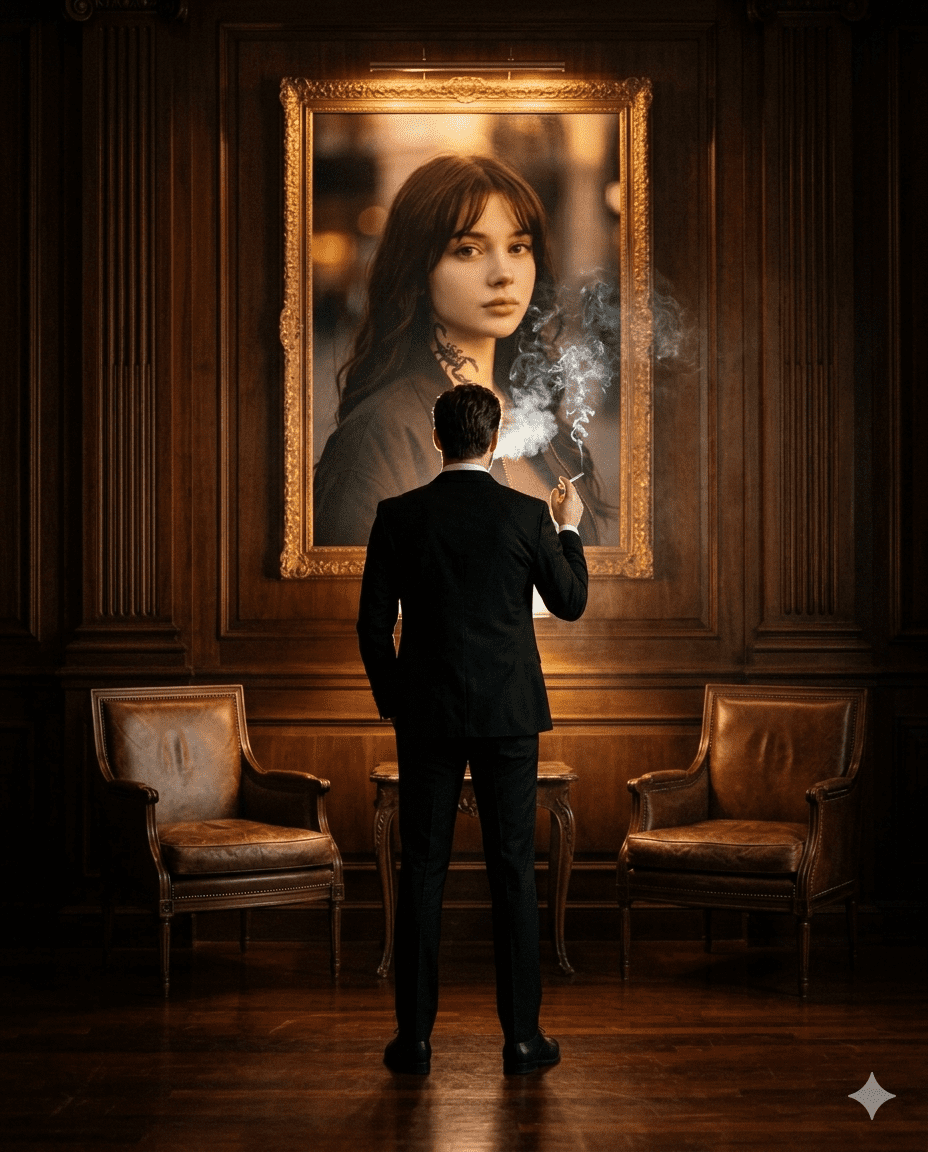
10. The Final Frame:
Best for: Dark luxury aesthetics and high-end cinematic visuals.
Prompt:
Create a cinematic luxury interior of a man standing in a dark wood-paneled room facing a large portrait. He wears a tailored black suit holding a lit cigarette with smoke rising. The painting features a softly lit woman with an intense gaze. Warm spotlight creates a halo effect with deep shadows. Symmetrical composition with vintage chairs and reflective wooden floor. Rich cinematic tones and textures. Shot with an 85mm lens and shallow depth of field. Use aspect ratio 4:5.
The Reality Check
Here’s what most people miss.
Cinematic images aren’t about what you show.
They’re about what you imply.
Every prompt above works because it creates:
- A subject
- A focal point
- A story
The man isn’t the main character. The moment is. If you treat AI like a keyword generator, you’ll get generic images.
If you treat it like a camera inside a scene, you’ll get something that actually feels real.
Use these prompts to build mood, tension, and story and your images will stop looking like AI and start looking like frames from a film.